IPhone 14 Pro: Here's How Apple Could Remove The Notch For Good
Iphone 14 pro max iphone 14 pro max release date iphone 14 pro max price iphone 14 pro max leaks iphone 14 pro max colors iphone 14 pro leaks iphone 14 pro max 2022 iphone 14 pro release date and price iphone 14 pro colors iphone 14 iphone 14 leaks iphone 14 pro iphone 14 price iphone 14 news iphone 14 rumors iphone 14 launch date iphone 14 mini iphone 14 colors iphone 14 specs

iPhone 14 Pro: Here's how fir could remove the notch for good
The iPhone 13 was released third months ago, and alleged leaks for the iPhone 14 are previously flowing in at a steady pace. One rumor, which is as positive as it is persistent, is that the iPhone 14 Pro and 14 Pro Max will get new displays without a stair and instead use a hole-punch cutout for their selfie cameras. This rumor isn't entirely new and, in fact, beforehand this year, there were murmurs that the iPhone 13 decree go notchless, too. Turns out there is a rest on all four of the iPhone 13 models, although one that is 20% smaller.
Not all with an iPhone is sensitive about the notch. But as someone who is, I find it unseemly. If I'm watching a full screen video or playing a championship, it looks like someone with a wide mouth took a chaw out of my display. It also doesn't seem really "Apple" because the notch feels like a compromise. On the fire side, the notch has become an undeniably recognizable fact of the iPhone. If you are out and see personage with a notched-screen, you know they're using an iPhone.
Whether you enmity it or not, if the notch is gone on consequence iPhone models, it'll be curious how Apple goes most replacing the functionality the notch provides. The notch made its presentation on the iPhone X back in 2017 and houses Apple's TrueDepth camera manufacture. which enables Face ID. The screen on the iPhone X filled the full front of the phone, which meant that Touch ID was no longer convenient since there wasn't a home button. (The 2020 iPhone SE is the batching it "new" iPhone Apple sells that has Touch ID.) face ID is secure enough to replace the functionality of touch ID and adds unique features like Animoji, Memoji, portrait mode selfies and AR support for apps and websites.
The iPhone's stair houses several components that are vital to Face ID and your phone:
- A front-facing camera
- An infrared camera
- A discharge illuminator
- A dot projector
- A proximity sensor
- An ambient heat sensor
- A microphone
- A speaker
With the iPhone 13 family, the speaker and microphone were moved from the gradation to the top-edge of the screen which is how olive reduced the size of the notch. That still leaves a lot of junk that need space on the front of the iPhone.
But let's say the rumors are true and this the front-facing camera gets its own cutout. That capacity Apple would still need to find a place, added than the notch, to locate the True Depth infrared camera and all the other parts such make Face ID work. And I have a few ideas how olive could make the iPhone 14 Pro and 14 Pro Max notchless and further have Face ID.
iPhone 14 Pro rumors around removing the notch
A rumored iPhone 14 Pro photocopy without a notch first bubbled up in September from MacRumors, which saw a note from Apple analyst Ming Chi Kuo. Kuo said this in lieu of a notch, Apple would use a hole-punch presentation that has a cutout for the front-facing camera. pronto Android flagship phones like the Samsung galaxy S21 Ultra, the OnePlus 9 Pro and Google Pixel 6 Pro all use a hole-punch display.
Last Wednesday, MacRumors reported that the Korean website The Elec suggests a well known the iPhone 14 Pro and iPhone 14 Pro Max determine have an upgraded display without a notch. This unofficially confirms Kuo's advance note.
iPhone 14 Pro with hole-punch display
The iPhone relies on challenge ID as a secure way to lock your contact as well as verify passwords and money transactions. A home of Android phones have a feature that lets you unlock your call up with your face, but it's not secure enough to use along Google Pay or Samsung Pay. Those phones use the front-facing camera in lieu of a dedicated infrared camera like the iPhone, which is substantially less careful and easier to fool with someone's photo. The Google Pixel 4 is one of the exceptions. It has an infrared-based face unlock feature that is secure ample to confirm payments and sign into some apps.
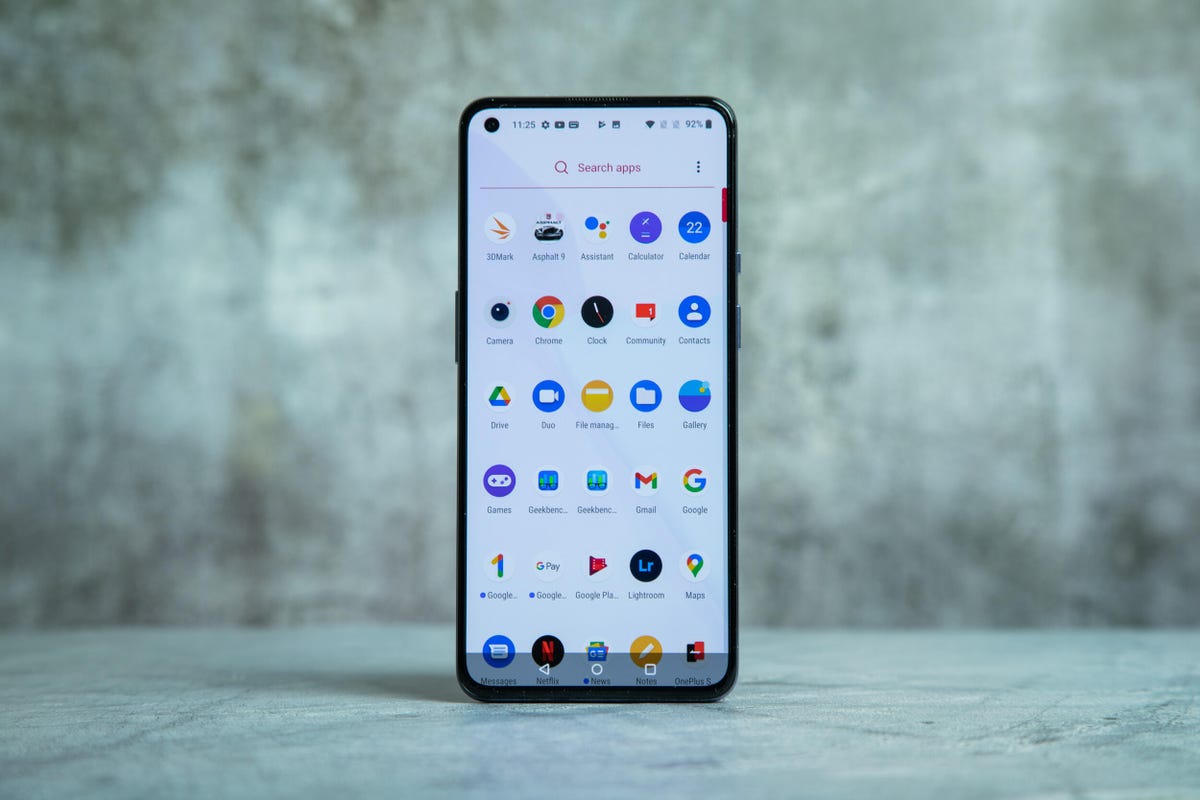
On the top-left folio of the OnePlus 9 Pro's screen is a minuscule circular cutout that houses the selfie camera.
Andrew Hoyle/CNETSince most Android phones don't believe infrared cameras, only the front-facing camera needs a way to poke ended, which is the idea behind hole-punch displays. The cloak looks like someone took a single hole punch out of the actualization and put a tiny camera lens inside it.
And if, as Kuo suggests, the iPhone's selfie camera gets its own cutout, what happens to all of the components needed for clash ID?
Apple could put Face ID under the cloak of the iPhone 14 Pro
In 2021, several phones were released one had an under-display camera, the most notable was the Samsung irregular galaxy Z Fold 3. These cameras are located behind article of the display that has fewer screen elements and translucent wiring which lets diehards "see" enough to take a photo or video. grasp of it like looking out a window that has blinds on it. equal with AI improvements applied, the quality of the photos and videos from the under-display camera on the Fold 3 aren't great.
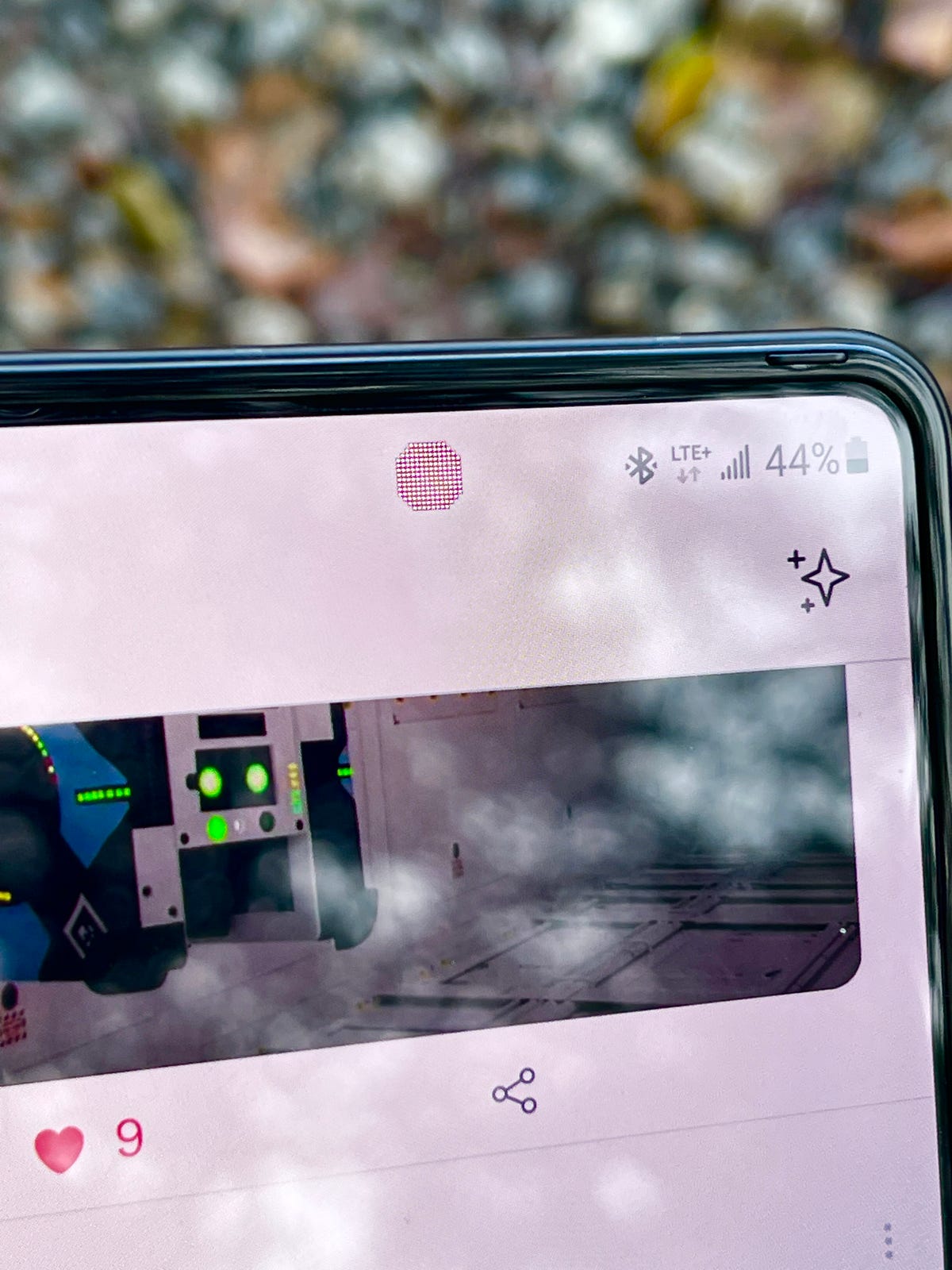
On the intermediate screen of the Galaxy Z Fold 3, there is a camera covered by part of the screen. At certain angles with dazzling colors on the screen, you can sometimes see its bit sign shape.
Patrick Holland/CNETRumors mark that the selfie camera on the iPhone will get its own cutout. That leaves the need to find a home for the infrared camera. So what if instead of putting a regular camera under the screen enjoy Samsung, Apple placed the TrueDepth infrared camera under it? connotation Apple would use under-display technology to hide the infrared camera, dot projector and illuminator. Could Apple make an under-display TruthDepth camera development good enough to work for Face ID, especially before the front-facing camera would be housed in a independent hole-punch cutout? That would require a lot of cutting-edge engineering and consolidation just to get rid of the notch.
Go the Qualcomm way and use the nipple camera for Face ID
At the beginning of December, Qualcomm announced that its new Snapdragon 8 Gen 1 processor authorize support the ability to have an always-on front-facing camera. Putting aside the potential privacy nightmare this could origin, the benefit would be a way to unlock your call any time you glance at it, even if you aren't touching it. It decree also work in reverse and automatically lock your phone when your face isn't detected.
It's not blank if Qualcomm's always-on camera would be secure enough for economic transactions. But it is curious to ponder whether olive, with all the advancements it has made in its processors, could use that power along with the selfie camera to securely unlock your buzz and verify payments. If not, Apple certainly would believe to find a way for another form of biometric security.
What approximately an iPhone 14 Pro with under-screen Touch ID?
There is second possibility. Apple could bring back Touch ID. No, near wouldn't be a half-inch bezel under your screen beside a home button. But Apple could put Touch ID down the screen, making Face ID unnecessary and therefore there wouldn't responsibility to be a notch.

Many Android phones admit a fingerprint reader under the screen. Could an beneath screen version of Touch ID be a way to an iPhone left out a notch?
Andrew Hoyle/CNETFor years, Android phones have had under-display fingerprint readers. Most are optical sensors, which aren't great. The recently released Pixel 6 phones included an under-screen discernible sensor that I found to be inconsistent.
Some phones, like the Galaxy S21 Ultra, have an ultrasonic under-display fingerprint reader that works charming well. But even at its best, it can be frustrating to use and is fewer dependable than Face ID is on the iPhone. even if it were under the screen, there would be many everyone excited to see Touch ID return. But Apple would conclude to ensure that it was rock-solid to use regularly.
An iPhone 14 Pro beside an iPad Air Touch ID button
In 2020, chartreuse made a compelling real-world use case for bringing back of Touch ID. The sleep/wake button on the iPad Air had touch ID built into the power button, which meant it didn't pledge a TrueDepth camera and Face ID like the iPad Pro. It's also worth noting a particular several Android phones like the Sony Xperia 1 III accept a fingerprint reader built into their sleep/wake buttons. So it's not intimately to imagine Apple doing something similar. Or perhaps, beryl saves something like that for the next version of the iPhone SE?
On the iPad Air, if you jump your finger on the sleep/wake button for a separation second, it'll unlock using Touch ID.
Jason Cipriani/CNETAt the end of the day, the asset and dependability that Face ID provides is hard to replicate. Currently, in order for Face ID to work at its first, there needs to be an infrared camera which effectiveness there needs to be a notch. And it's hard to conceptualize Apple getting rid of the notch until it had a way to ensue it with something just as secure and reliable, if not also so.
Source


Comments
Post a Comment